Two-Way PrepositionsPrzyimki dwufunkcyjne
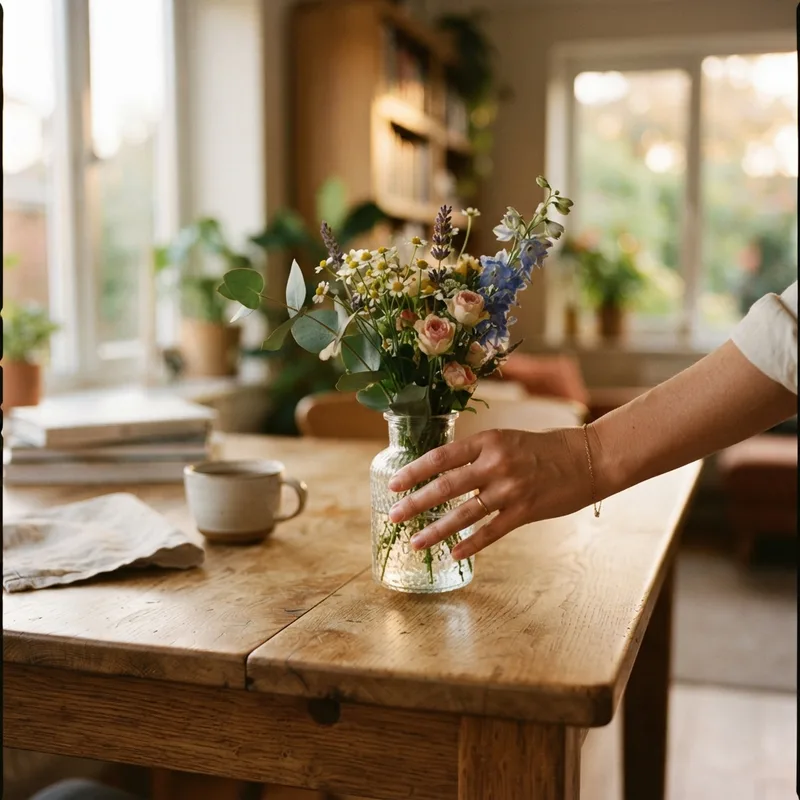
wohin? — movement— ruch
Ich stelle die Vase auf den Tisch.
I'm putting the vase on the table.
Stawiam wazon na stole.
Akkusativ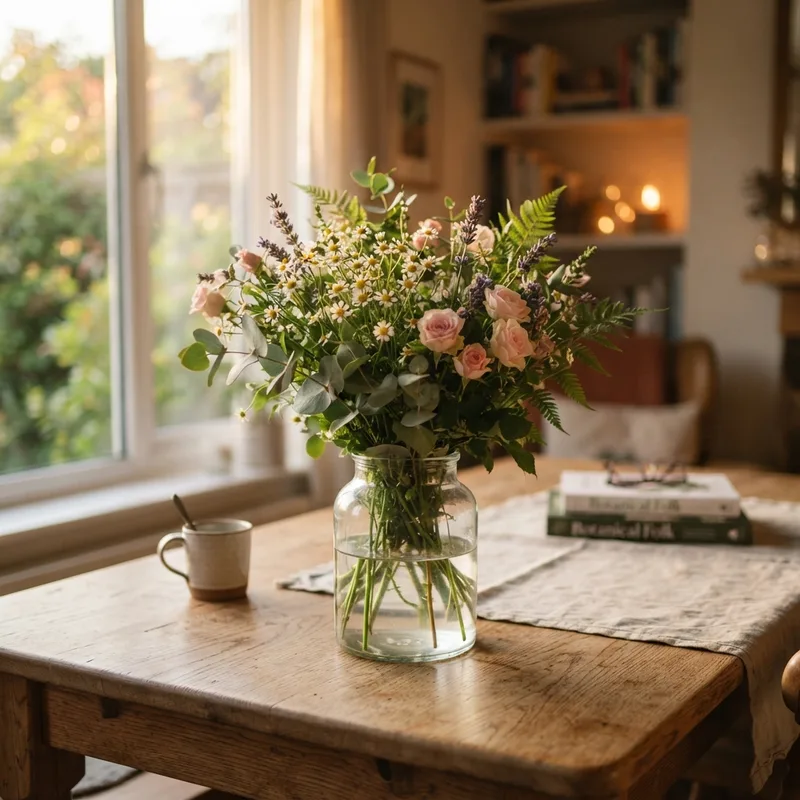
wo? — location— położenie
Die Vase steht auf dem Tisch.
The vase is standing on the table.
Wazon stoi na stole.
DativNine prepositions — an, auf, hinter, in, neben, über, unter, vor, zwischen — are called Wechselpräpositionen (“switching prepositions”) because they can take either the Akkusativ or the Dativ, depending on the situation:
- Akkusativ when there’s movement toward a destination — ask wohin? (“where to?”).
- Dativ when something is already in a fixed location — ask wo? (“where?”).
Ich stelle die Vase auf den Tisch.  (wohin? → auf den Tisch — Akkusativ)
Die Vase steht auf dem Tisch.       (wo? → auf dem Tisch — Dativ)
The verb pairs that make this click
German has matched pairs of verbs — one describing the action of putting something somewhere (takes Akkusativ), the other describing the resulting state of being there (takes Dativ):
| Action (→ Akkusativ) | State (→ Dativ) |
|---|---|
| stellen (to place, upright) | stehen (to stand) |
| legen (to lay down) | liegen (to lie) |
| setzen (to set/sit down) | sitzen (to sit) |
| hängen (to hang [something]) | hängen (to hang, itself) |
Notice hängen is used both ways with no change in the verb itself — which means the only signal for meaning is the case of the article that follows it.
A quick sanity check
If you can rephrase the sentence with “to” or “onto” in English, you almost certainly need the Akkusativ. If “at” or “in” fits better, it’s the Dativ.
I'm going to the kitchen.   → Akkusativ (in die Küche)
I am in the kitchen.        → Dativ (in der Küche)
Not every preposition switches
Don’t forget the fixed-case prepositions from the other case pages: für, durch, gegen, ohne, um always take the Akkusativ; aus, bei, mit, nach, seit, von, zu always take the Dativ. Only this list of nine actually switches.
wohin? vs. wo? — ask the question first, out loud if it helps. If the honest answer describes a destination, you’re in Akkusativ territory; if it describes a place something already is, it’s Dativ. The verb pair (stellen/stehen, legen/liegen…) is usually your fastest clue.
Dziewięć przyimków — an, auf, hinter, in, neben, über, unter, vor, zwischen — nazywa się Wechselpräpositionen (“przyimkami przełączającymi”), bo mogą przyjmować albo Akkusativ, albo Dativ, w zależności od sytuacji:
- Akkusativ, gdy jest ruch w kierunku celu — zapytaj wohin? (“dokąd?”).
- Dativ, gdy coś już znajduje się w stałym miejscu — zapytaj wo? (“gdzie?”).
Ich stelle die Vase auf den Tisch.  (wohin? → auf den Tisch — Akkusativ)
Die Vase steht auf dem Tisch.       (wo? → auf dem Tisch — Dativ)
Pary czasowników, dzięki którym to wszystko ma sens
Niemiecki ma dopasowane pary czasowników — jeden opisuje czynność umieszczania czegoś gdzieś (przyjmuje Akkusativ), drugi opisuje wynikowy stan bycia tam (przyjmuje Dativ):
| Czynność (→ Akkusativ) | Stan (→ Dativ) |
|---|---|
| stellen (postawić, pionowo) | stehen (stać) |
| legen (położyć) | liegen (leżeć) |
| setzen (posadzić/usiąść) | sitzen (siedzieć) |
| hängen (powiesić [coś]) | hängen (wisieć) |
Zauważ, że hängen jest używane w obu znaczeniach bez żadnej zmiany w samym czasowniku — co oznacza, że jedynym sygnałem znaczenia jest przypadek następującego po nim rodzajnika.
Szybki test zdroworozsądkowy
Jeśli możesz przeformułować zdanie z “do” albo “na” (w sensie kierunku) w polskim, niemal na pewno potrzebujesz Akkusativ. Jeśli lepiej pasuje “w” albo “na” (w sensie miejsca), to Dativ.
Idę do kuchni.   → Akkusativ (in die Küche)
Jestem w kuchni. → Dativ (in der Küche)
Nie każdy przyimek się przełącza
Nie zapominaj o przyimkach o stałym przypadku z innych stron o przypadkach: für, durch, gegen, ohne, um zawsze przyjmują Akkusativ; aus, bei, mit, nach, seit, von, zu zawsze przyjmują Dativ. Tylko ta lista dziewięciu naprawdę się przełącza.
1. Fill in the blanks1. Uzupełnij luki
Fill in the correct article, ending, or form for each blank.
Uzupełnij poprawny rodzajnik, końcówkę lub formę w każdej luce.
0 / 21 answeredodpowiedzi
- 1.Ich stelle die Vase auf Tisch.(der (Akkusativ — movement))
- 2.Die Vase steht auf Tisch.(der (Dativ — location))
- 3.Ich lege das Buch auf Regal.(das (Akkusativ — movement))
- 4.Das Buch liegt auf Regal.(das (Dativ — location))
- 5.Ich gehe in Küche.(die (Akkusativ — movement))
- 6.Ich bin in Küche.(die (Dativ — location))
- 7.Er hängt das Bild an Wand.(die (Akkusativ — movement))
- 8.Das Bild hängt an Wand.(die (Dativ — location))
- 9.Die Katze springt unter Tisch.(der (Akkusativ — movement))
- 10.Die Katze schläft unter Tisch.(der (Dativ — location))
- 11.Ich setze mich neben Fenster.(das (Akkusativ — movement))
- 12.Ich sitze neben Fenster.(das (Dativ — location))
- 13.Wir gehen vor Haus.(das (Akkusativ — movement))
- 14.Wir stehen vor Haus.(das (Dativ — location))
- 15.Der Ball rollt zwischen Stühle.(die (Akkusativ, plural — movement))
- 16.Das Auto steht hinter Haus.(das (Dativ — location))
- 17.Er fährt das Auto hinter Haus.(das (Akkusativ — movement))
- 18.Die Lampe hängt über Tisch.(der (Dativ — location))
- 19.Ich hänge die Lampe über Tisch.(der (Akkusativ — movement))
- 20.Das Buch liegt in Tasche.(die (Dativ, feminine — location))
- 21.Ich lege das Buch in Tasche.(die (Akkusativ, feminine — movement))
2. Multiple choice2. Wybór wielokrotny
Choose the correct form to complete each sentence.
Wybierz poprawną formę, aby uzupełnić każde zdanie.
0 / 17 answeredodpowiedzi
1.Ich stelle die Vase auf ___ Tisch.(der (Akkusativ — movement))
2.Die Vase steht auf ___ Tisch.(der (Dativ — location))
3.Ich gehe in ___ Schule.(die (Akkusativ — movement))
4.Ich bin in ___ Schule.(die (Dativ — location))
5.Das Bild hängt an ___ Wand.(die (Dativ — location))
6.Er hängt das Bild an ___ Wand.(die (Akkusativ — movement))
7.Die Katze liegt unter ___ Bett.(das (Dativ — location))
8.Die Katze läuft unter ___ Bett.(das (Akkusativ — movement))
9.Wir stehen vor ___ Haus.(das (Dativ — location))
10.Wir gehen vor ___ Haus.(das (Akkusativ — movement))
11.Der Stuhl steht zwischen ___ Fenstern.(die (Dativ, plural — location))
12.Ich setze mich zwischen ___ Freunde.(meine (Akkusativ, plural — movement))
13.Das Auto steht hinter ___ Haus.(das (Dativ — location))
14.Er fährt das Auto hinter ___ Haus.(das (Akkusativ — movement))
15.Die Lampe hängt über ___ Tisch.(der (Dativ — location))
16.Ich hänge die Lampe über ___ Tisch.(der (Akkusativ — movement))
17.Das Buch liegt in ___ Tasche.(die (Dativ, feminine — location))
3. Build the sentence3. Zbuduj zdanie
Click the words in the right order to build a correct German sentence.
Kliknij słowa we właściwej kolejności, aby zbudować poprawne niemieckie zdanie.
0 / 15 answeredodpowiedzi
1.I'm putting the vase on the table. (movement)
2.The vase is standing on the table. (location)
3.I'm going into the kitchen.
4.I am in the kitchen.
5.He's hanging the picture on the wall.
6.The picture is hanging on the wall.
7.The cat is sleeping under the table.
8.The cat jumps under the table.
9.We are standing in front of the house.
10.We're walking to the front of the house.
11.The car is standing behind the house.
12.The lamp hangs over the table. (location)
13.I hang the lamp over the table. (movement)
14.The book is lying in the bag. (location)
15.I'm putting the book in the bag. (movement)
4. Translate into German4. Przetłumacz na niemiecki
Write your own translation, then reveal a model answer and grade yourself honestly — German often allows more than one correct word order.
Napisz własne tłumaczenie, następnie odsłoń przykładową odpowiedź i szczerze oceń siebie — niemiecki często dopuszcza więcej niż jeden poprawny szyk zdania.
0 / 17 self-checkedsprawdzonych
1.I'm putting the vase on the table.
2.The vase is standing on the table.
3.I'm going into the kitchen.
4.I am in the kitchen.
5.He's hanging the picture on the wall.
6.The picture is hanging on the wall.
7.The cat is sleeping under the table.
8.The cat jumps under the table.
9.We are standing in front of the house.
10.I'm sitting next to the window.
11.I'm sitting down next to the window.
12.The ball is rolling between the chairs.
13.The car is standing behind the house.
14.The lamp hangs over the table.
15.I hang the lamp over the table.
16.The book is lying in the bag.
17.I'm putting the book in the bag.